Choosing pizza boxes is a packaging decision, but it is also an operations decision. The right box needs to fit the pizza, protect it during delivery, support handling at the counter, and remain practical to store and reorder. For buyers comparing pizza boxes wholesale, the most useful approach is to specify the box around real menu sizes and delivery conditions rather than choosing on unit price alone.
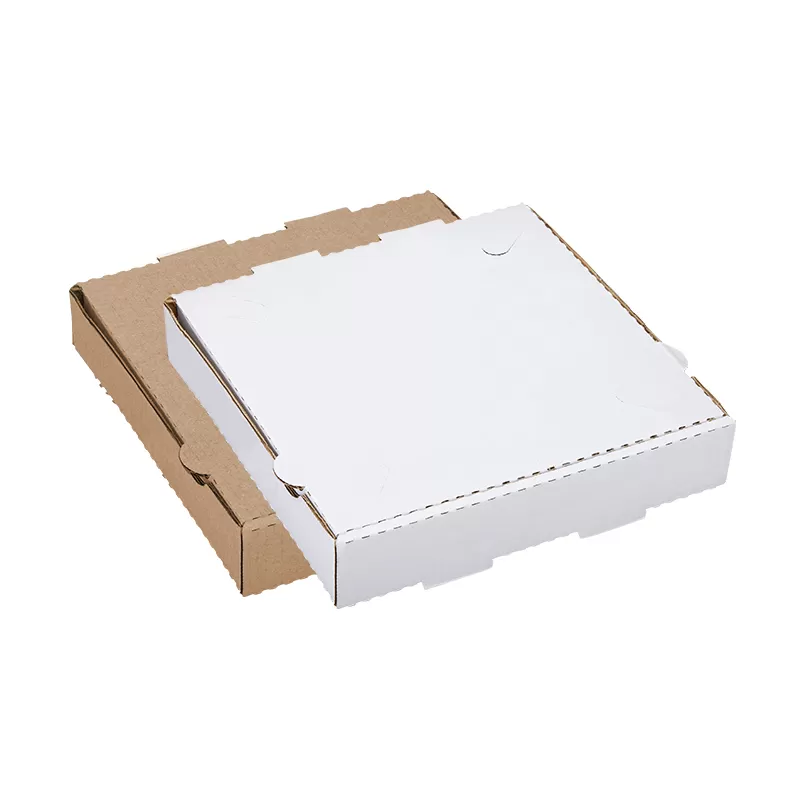
Keystone Supply's corrugated pizza box range is designed for takeout and delivery, with multiple sizes, white and kraft options, and custom-print availability. The U.S. FDA also treats food packaging and its components as food-contact substances, so packaging selection should always consider the intended food-contact use and supplier documentation. See the FDA's food packaging and food-contact overview for regulatory background.
What Should Pizzerias Check Before Ordering Pizza Boxes?
A practical purchasing specification starts with four questions: What pizza sizes are sold? How long are typical delivery trips? How much hot food is packed at peak periods? And how much dry storage is available? These answers affect box dimensions, case quantities, stacking needs, and whether stock or printed boxes make more sense.
Buyers evaluating pizza boxes suppliers should also ask for consistent dimensions and case information. Even small differences in fit can affect packing speed. A box that is too large lets the pizza shift; one that is too tight can contact toppings or make closing harder. For multi-size menus, standardizing a small number of box sizes can simplify ordering and reduce the number of packaging SKUs staff must manage.
Purchase factor | Stock corrugated box | Custom-printed corrugated box | What the buyer should verify |
Primary purpose | Fast, standardized foodservice use | Product protection plus brand presentation | Which format fits order volume and brand needs |
Size planning | Match existing menu sizes | Match menu sizes before artwork is approved | Internal fit, stacking and lid clearance |
Inventory | Easier for general replenishment | Requires more advance planning | Case pack, reorder point and storage space |
Artwork | No artwork setup | Logo and brand graphics can be added | Approved files, colors, print area and current MOQ |
Best use | Routine takeout and delivery | High-volume branded programs | Whether demand is stable enough for a custom run |
How Do Corrugated Construction, Fit and Moisture Control Affect Pizza Quality During Delivery?
KSI's corrugated pizza boxes use corrugated cardboard, a structure that helps provide rigidity and thermal protection during transport. Corrugated construction is especially useful when boxes are stacked during a delivery run because the package needs to resist crushing while still remaining easy for staff to fold and close.
Fit matters just as much as material. The box should support the pizza without excessive movement and should close without pressing on the product. For a restaurant that sells several diameters, buyers should map each menu size to an approved box SKU rather than relying on staff to select a box by sight.
Moisture management also matters. Hot pizza releases steam after it leaves the oven. Box design and handling should allow the product to travel without trapping excessive moisture around the crust. Buyers should therefore review the actual box format, closure design and moisture control performance with their supplier instead of assuming that all cardboard pizza boxes perform the same way.
For businesses that want the package to carry brand graphics, KSI also offers custom pizza boxes with logo in multiple listed sizes. Custom printing is best planned after the operational box specification is finalized, so the artwork is built around the box the kitchen will actually use.
What Changes When You Order Pizza Boxes in Bulk?
Ordering bulk pizza boxes can reduce the frequency of purchasing activity, but a larger order also increases the importance of forecasting and storage. A useful rule is to base order quantity on weekly usage by box size, expected seasonal peaks, available storage, and supplier lead time. If a business operates multiple stores, it should also decide whether inventory is held centrally or delivered by location.
Do not treat every size as equally important. A high-volume 12-inch box may justify deeper stock than an occasional specialty size. Buyers can also set a minimum reorder point for each SKU so staff do not wait until the last case is opened before placing a new order.
When comparing pizza packaging boxes, review total program cost rather than box price alone. Storage efficiency, packing speed, product fit, print requirements and the cost of emergency replenishment all affect the real cost of the packaging program.
Paper and paperboard are widely recovered materials in the U.S., but recycling outcomes still depend on local acceptance and contamination. The EPA's paper and paperboard data provides useful background. Restaurants should check local recycling guidance before making disposal claims to customers.
If your business is building or revising a pizza packaging program, review KSI's pizza box options and contact Keystone Supply with your size mix, expected volume and custom-print requirements.
Conclusion
The best pizza boxes are not simply the cheapest boxes that fit. A stronger purchasing decision considers corrugated structure, exact menu fit, delivery conditions, case quantities, storage capacity and whether custom printing adds value at the business's order volume. Standardizing these variables makes it easier to compare suppliers and maintain consistent packaging across busy service periods.
FAQs
What information should I provide when requesting pizza boxes wholesale?
Provide your required box sizes, estimated volume by size, preferred white or kraft appearance, delivery locations, and whether custom printing is needed. This gives the supplier enough information to recommend a practical program.
Are corrugated pizza boxes suitable for delivery?
Corrugated boxes are widely used for takeout and delivery because the fluted structure adds rigidity and insulation. The final choice should still be matched to pizza size, stacking and delivery conditions.
When should a pizzeria consider custom printing?
Custom printing makes the most sense when order volume is predictable and the business wants consistent packaging across takeout and delivery. Confirm current minimum quantities, print colors and artwork requirements before committing.