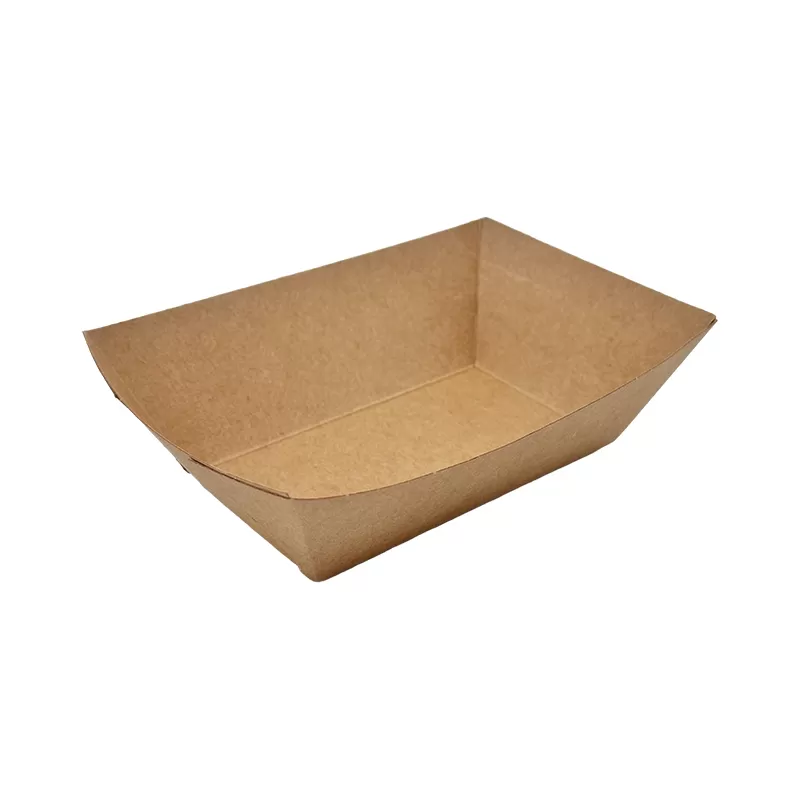
For concessions, food trucks, cafeterias, and quick-service restaurants, choosing disposable paper food trays requires more than matching a menu item to an ounce or pound label. Physical dimensions, food density, toppings, liners, and carrying space determine how a tray performs in actual service.
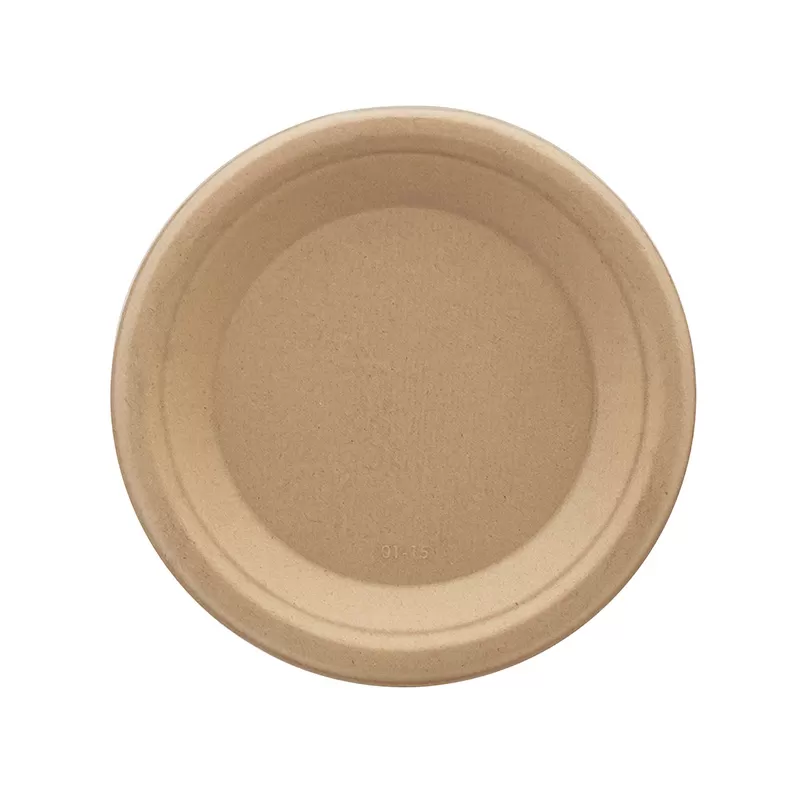
Keystone Supply currently lists paper food trays from 4 oz through 5 lb in Kraft and red plaid options, giving operators formats for snacks, sides, fried foods, and larger meal portions.
What Ounce and Pound Labels Mean for Paper Food Trays
Ounce and pound labels on open paper trays are product size categories, not exact guarantees of liquid volume or finished food weight. A 1 lb tray does not mean every menu item should weigh exactly one pound because foods occupy space differently.
• Ounce labels: KSI lists 4 oz, 6 oz, and 8 oz trays for smaller serving formats and snack portions.
• Pound labels: The current range continues with 1 lb, 2 lb, 2.5 lb, 3 lb, and 5 lb trays for progressively larger portions.
• Volume conversions: Fluid ounces, pints, and quarts describe volume and should not be assumed to equal a paper tray label without testing the tray and food.
For reference, NIST cooking measurement equivalencies show that 16 fluid ounces equal about one pint and 32 fluid ounces about one quart. Tray selection should still use the manufacturer’s dimensions and a real portion test.
Comparing Top, Base, and Depth Measurements
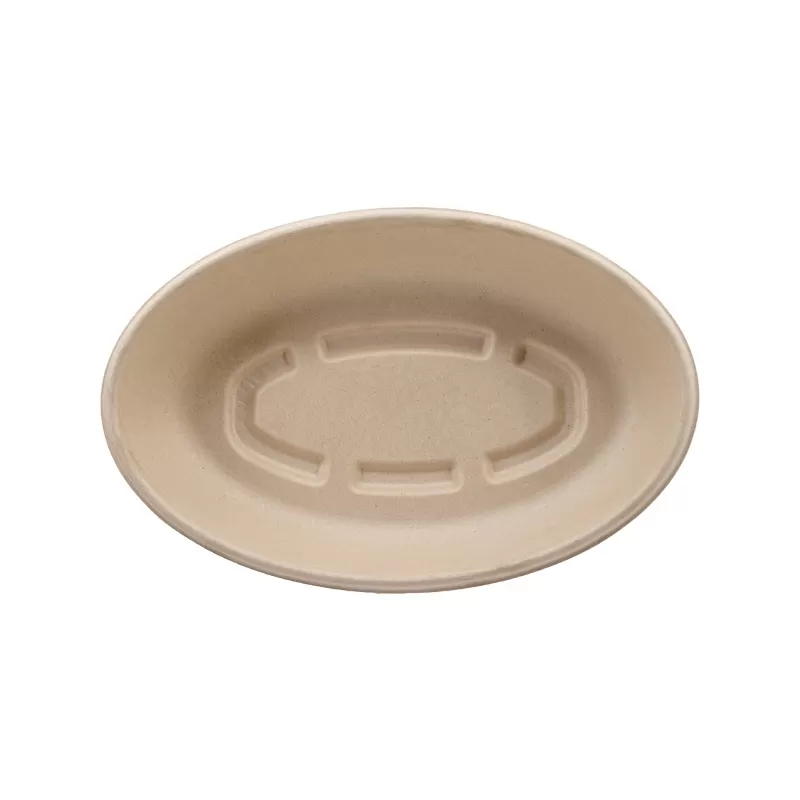
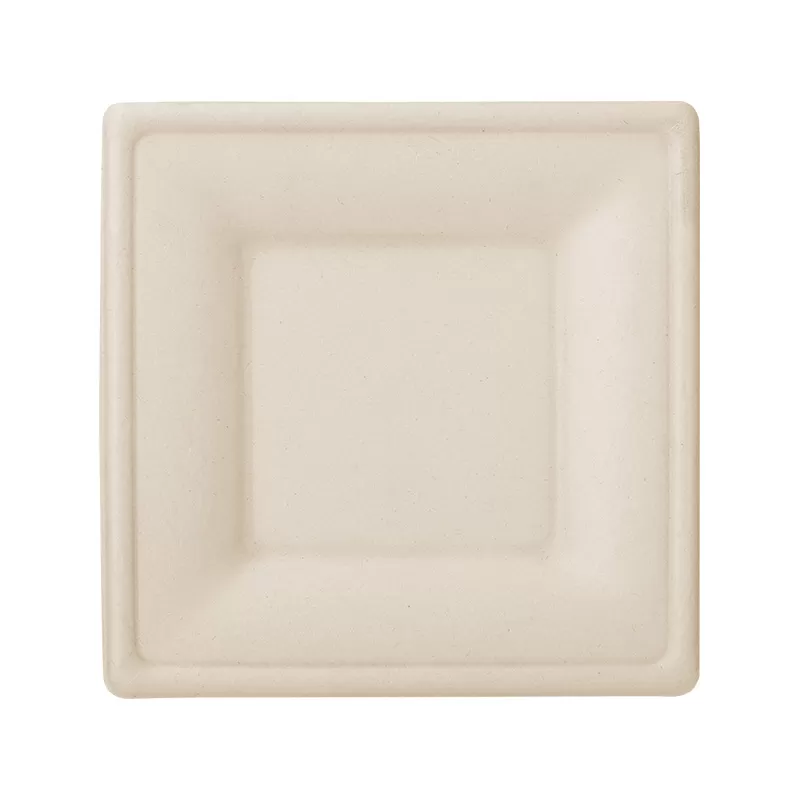
Tray dimensions are often more useful than the size label. KSI’s 4 oz Kraft tray measures 3.82 x 2.68 x 1.18 inches, the 1 lb tray 4.92 x 3.54 x 1.69 inches, and the 5 lb tray 8.27 x 5.71 x 2.32 inches. Wider trays provide more presentation area, while added depth helps contain piled foods. Buyers should compare all three measurements together.
Matching Tray Size to Measured Food Portions
The most reliable way to choose a tray is to test the actual menu portion. Prepare the normal serving with the same scoop, scale, or piece count used during service and place it in the candidate tray. Check for overflow, carrying comfort, and whether sauces or loose toppings stay contained. This is especially useful for paper snack trays because fries, wings, nachos, and other foods can require different space even at similar weights.
Allowances for Liners, Toppings, and Carrying Space
A tray that technically holds the food may still be too small for service. Extra space can improve presentation and reduce spills.
• Liners: Paper liners use part of the available interior space.
• Toppings and sauces: Loaded fries or nachos need headroom so toppings stay inside the tray.
• Handling space: Leaving part of the rim open makes paper food serving trays easier to carry.
• Takeout fit: Confirm the filled tray fits the intended takeout bag or box.
A Paper Tray Selection Chart for Common Menu Items
The chart uses current KSI dimensions as a planning reference. Menu examples are starting points; actual portions should be tested before ordering.
KSI size | Listed dimensions | Possible menu use | Case pack |
4 oz | 3.82 x 2.68 x 1.18 in | Samples, small snacks | 1,000 |
6 oz | 4.13 x 2.83 x 1.18 in | Small sides, fries | 1,000 |
8 oz | 4.45 x 3.15 x 1.38 in | Sides, snack portions | 1,000 |
1 lb | 4.92 x 3.54 x 1.69 in | Fries, tenders, appetizers | 1,000 |
2 lb | 5.51 x 3.93 x 1.69 in | Loaded sides, larger snacks | 1,000 |
3 lb | 7.09 x 4.92 x 2.09 in | Meal portions, shareables | 500 |
5 lb | 8.27 x 5.71 x 2.32 in | Large or group portions | 500 |
KSI also offers the size series in red plaid. When comparing disposable paper trays for food, buyers can simplify inventory by standardizing a limited number of sizes around their highest-volume menu items.
Conclusion
Selecting disposable paper food trays is most reliable when operators look beyond the size label and test the actual food portion. Dimensions, liners, toppings, handling space, and takeout packaging all influence the choice. Keystone Supply’s 4 oz through 5 lb range covers small snacks through larger meals. Measuring real portions first can improve presentation, reduce over-packaging, and simplify daily tray inventory.
FAQs About Disposable Paper Food Tray Sizes
Does a 1 lb paper food tray always hold exactly one pound of food?
No. It is a tray size designation, not a guarantee that every portion should weigh exactly one pound. Food density and shape affect usable capacity.
What paper food tray sizes does Keystone Supply list?
KSI lists 4 oz, 6 oz, 8 oz, 1 lb, 2 lb, 2.5 lb, 3 lb, and 5 lb trays in Kraft and red plaid.
How should restaurants choose between two nearby tray sizes?
Test the normal portion in both sizes and compare presentation, spill risk, carrying space, and takeout fit.
Are paper food trays suitable for greasy foods?
KSI describes its trays as durable and grease-resistant. Buyers should still test the actual food and holding time before standardizing a tray.